
 Nepali
 English


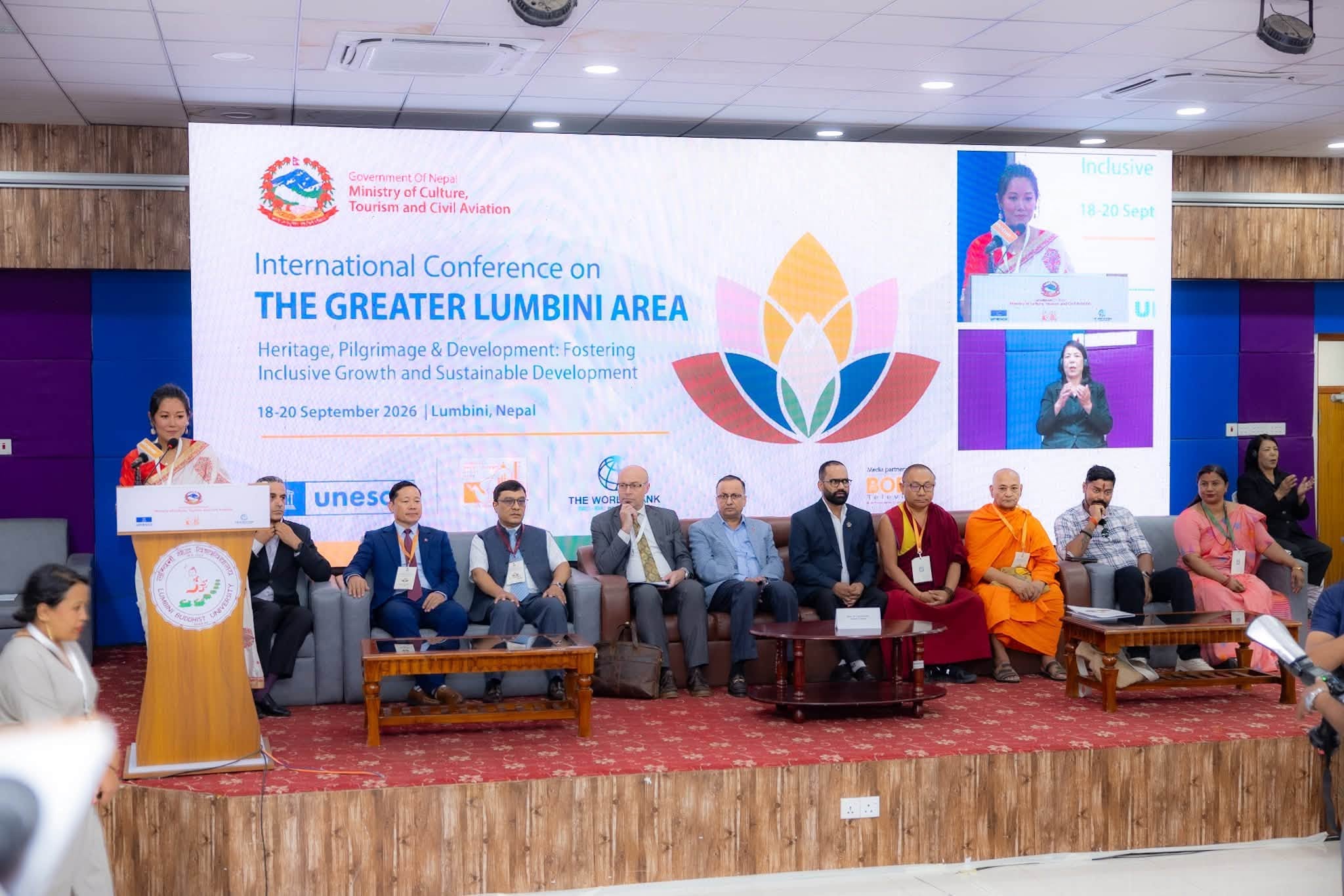
21 September 2026, Lumbini: The three-day International Conference on the Greater Lumbini Area, held from 18–20 September 2026, concluded with a set of action priorities for sustainable heritage conservation, community development and responsible tourism. Organized by the Government of Nepal in collaboration with UNESCO, the Lumbini Development Trust and the World Bank, the conference brought together more than 150 participants, including local communities, monastic representatives, entrepreneurs, hospitality businesses, experts, policymakers, local stakeholders and development partners.
Opening the conference, Hon. Khadak Raj Paudel (Ganess), Minister for Culture, Tourism and Civil Aviation, reaffirmed Nepal’s commitment to balancing development with Lumbini’s spiritual and cultural values.
“Lumbini is not only a heritage site; it is a living, sacred heritage landscape where the teachings and practices of Buddha continue to inspire pilgrims and people from around the world. Through the Greater Lumbini Area Development Initiative, in partnership with the World Bank, we have an important opportunity to translate this shared vision into practical action. Above all, let us ensure that Lumbini continues to be a place from which the world can learn about peace, compassion, and our shared humanity.”
As part of the conference, participants visited key heritage sites, including the Sacred Garden of Lumbini, the birthplace of Lord Buddha and a UNESCO World Heritage Site, and Tilaurakot-Kapilavastu. The field visits provided an opportunity to observe the socio-cultural landscape, conservation efforts, existing challenges, and the needs of pilgrims and local communities.
Following the field visits, participants formed multidisciplinary Knowledge Circles to discuss key issues and develop prioritized recommendations. The groups also identified implementation timelines and responsible institutions, including the Lumbini Development Trust, local governments, site managers and relevant ministries.
Gyanin Rai, Officiating Member Secretary of the Lumbini Development Trust, said:
“The Lumbini Development Trust remains committed to working with all stakeholders to safeguard the Outstanding Universal Value, authenticity and integrity of Lumbini, while improving pilgrimage facilities, visitor experiences, accessibility, environmental sustainability, wellness and local economic opportunities.”
Jaco du Toit, UNESCO Representative to Nepal, emphasized the need to protect Lumbini’s spiritual character while ensuring benefits for local communities:
“Lumbini is a UNESCO World Heritage Site and a sacred place of peace that speaks to people around the world. How do we welcome visitors while protecting its spiritual value, supporting local communities, and making tourism a source of learning, peace, and wellness? Through this conference, we aim to deliver practical ideas that safeguard Lumbini’s sacred character while bringing real economic benefits to local small businesses and workers.”
Elad Shenfeld, Senior Disaster Risk Management Specialist, World Bank Group, highlighted the importance of integrating conservation and development:
“Lumbini’s value goes far beyond bricks and archaeology; it lies in its unique spiritual character as a living sacred landscape. Conservation and development must therefore go hand in hand. Through the Greater Lumbini Area Development Initiative, our aim is to support the Government of Nepal in protecting Lumbini’s extraordinary heritage while improving infrastructure, strengthening the visitor experience, and creating meaningful economic opportunities for local communities.”
The conference concluded with the following key action priorities:
- Protect the sacred character: Maintain the peaceful Buddhist atmosphere of the Sacred Garden and ensure that religious, cultural and visitor activities respect its sacred landscape, rituals and faith.
- Strengthen community participation: Coordinate local community involvement through municipalities, in collaboration with the Lumbini Development Trust, community organizations, monastic communities and other stakeholders.
- Adopt a sacred landscape approach: Integrate heritage conservation, community development, environmental protection and local livelihood opportunities.
- Ensure planned development: Prepare and implement master plans, land-use and conservation plans, hydrological studies, drainage measures and environmental mitigation plans before approving major infrastructure or development works.
- Conserve heritage: Restore and maintain the Sacred Garden, Maya Devi Temple, ancient monuments and archaeological remains while respecting their historical, religious and spiritual values.
- Promote visitor awareness: Educate visitors about the meaning and significance of Lumbini’s rituals and sacred traditions.
The conference outcomes will inform future Government of Nepal programmes and planning for the Greater Lumbini Area, including implementation of the World Bank-financed Greater Lumbini Area Development Project.