
 Nepali
 English


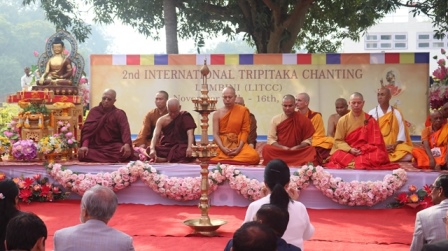
Lumbini: Three day-long ceremonies of 2nd International Tripitaka Chanting has been completed at the birthplace of Lord Buddha, Lumbini. Thousands of Buddhist monks and pilgrims from 25 countries including Thailand, Myanmar, China, Korea, India, and Nepal chanted the verses of Tripitaka for three days.
The first day of the event started with a procession from Eternal Peace Flame to Mayadevi Temple. The representatives from Lumbini Cultural Municipality, Lumbini Development Trust, International Tripitaka Chanting Council, and Hotel Lumbini Kasai participated held the Tripitaka in the procession. Also, thousands of Monks and Nuns from various countries took part in the event.
The Chief Minister of Province No. 5 Hon. Shankar Pokharel inaugurated the formal ceremony of the chanting. Addressing the gathering of Buddhist monks, nuns and laities, the Chief Minister assured for the provincial government’s help in organizing of such events in future.
Ven. Maitri Mahasthavir, President of Akhil Nepal Bhikshu Mahasanga, Nepal and the Coordinator of the Second International Tripitaka Chanting, Lumbini urged the Government of Nepal to be the organizer of the third Tripitaka Chanting in Nepal.
The first day of the chanting was marked by chanting Sutrapitak. The monks, nuns and lay participants chanted the Sutrapitak in their own languages and styles.
The second day of the Ceremony witnessed the chanting of Abidhamapitak, led by monks from Burma (Myanmar), and followed by monks from Nepal, Japan, Vietnam, China, and others.
The third day witnessed the chanting of Binaypitak in the lead of monks from Thailand and Cambodia which concluded with the lighting of candles in the holy garden of Maya Devi Temple in the evening.
International Tripitaka Chanting in Lumbini has helped to promote Lumbini, the birthplace of Buddha as a Buddhist spiritual destination. It would also help enhance spirituality in Lumbini, the world cultural heritage property of the UNESCO.
The first Tripitaka Chanting Ceremony in Nepal was held in 2018 which was participated by about 700 monks and nuns from 18 countries and thousands of lay people.